Underwater Drones: Transforming Research and Education
- Rajesh V
- Dec 20, 2025
- 4 min read

Underwater drones, also known as remotely operated vehicles (ROVs), are revolutionizing the way we explore and understand our oceans. These innovative tools are not only enhancing scientific research but also transforming educational experiences for students and enthusiasts alike. With their ability to reach depths that are often inaccessible to humans, underwater drones are opening up new frontiers in marine exploration and environmental monitoring.
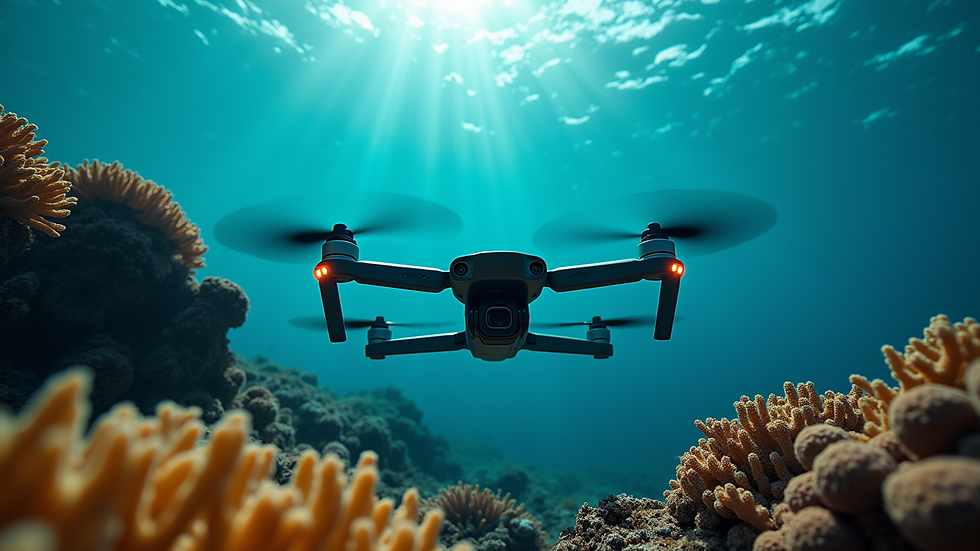
The Rise of Underwater Drones
The development of underwater drones has been fueled by advancements in technology, making them more accessible and affordable. Initially used primarily by research institutions and the military, these drones are now being adopted by schools, universities, and even hobbyists. The ability to capture high-definition video and collect data from the ocean floor has made them invaluable for various applications.
Key Features of Underwater Drones
High-definition Cameras: Most underwater drones are equipped with high-resolution cameras that can capture stunning footage of marine life and underwater landscapes.
Sonar Technology: Many models include sonar capabilities, allowing users to map the ocean floor and detect objects in murky waters.
Real-time Data Transmission: Underwater drones can transmit data back to the surface in real-time, enabling immediate analysis and decision-making.
User-friendly Interfaces: Modern drones often come with intuitive controls, making them accessible to users with varying levels of experience.
Applications in Research
Underwater drones are proving to be essential tools in marine research. They are being used to study everything from coral reef health to the behavior of marine animals. Here are some specific examples of how they are transforming research:
Coral Reef Monitoring
Coral reefs are vital ecosystems that are increasingly threatened by climate change and pollution. Researchers are using underwater drones to monitor the health of these reefs. By capturing images and videos over time, scientists can assess changes in coral cover, identify bleaching events, and track the effectiveness of conservation efforts.
Marine Biology Studies
Marine biologists are utilizing underwater drones to observe marine life in their natural habitats without disturbing them. For instance, researchers studying fish populations can deploy drones to gather data on species distribution and behavior. This non-invasive approach allows for more accurate assessments of marine ecosystems.
Environmental Assessments
Underwater drones are also being used for environmental assessments. They can collect data on water quality, sediment composition, and the presence of pollutants. This information is crucial for understanding the impacts of human activities on marine environments and for developing strategies to mitigate these effects.
Enhancing Education
The educational potential of underwater drones is immense. They provide students with hands-on learning experiences that can spark interest in marine science and environmental stewardship. Here are some ways underwater drones are being integrated into educational settings:
Classroom Learning
Many schools are incorporating underwater drones into their science curricula. Students can learn about marine ecosystems, robotics, and data analysis by operating drones and analyzing the footage they capture. This hands-on approach makes learning more engaging and relevant.
Field Trips and Expeditions
Educational institutions are organizing field trips that include the use of underwater drones. Students can explore local waterways, lakes, or coastal areas, collecting data and observing marine life firsthand. These experiences help students connect theoretical knowledge with real-world applications.
Research Projects
Universities are using underwater drones for student-led research projects. Students can design their own studies, collect data, and present their findings. This not only enhances their research skills but also fosters a sense of responsibility towards marine conservation.
Challenges and Considerations
While underwater drones offer numerous benefits, there are challenges and considerations to keep in mind:
Cost
Although prices have decreased, high-quality underwater drones can still be expensive. This may limit access for some educational institutions or researchers. However, as technology continues to advance, more affordable options are likely to emerge.
Technical Skills
Operating underwater drones requires a certain level of technical skill. Educators and researchers may need training to effectively use these tools and interpret the data they collect.
Environmental Impact
While underwater drones are generally non-invasive, it is essential to consider their environmental impact. Care should be taken to minimize disturbances to marine life and habitats during drone operations.
The Future of Underwater Drones
The future of underwater drones looks promising. As technology continues to evolve, we can expect to see even more advanced features and capabilities. Here are some trends to watch for:
Increased Autonomy
Future underwater drones may become more autonomous, allowing them to navigate and collect data without constant human intervention. This could enhance their efficiency and expand their applications in research and education.
Enhanced Data Analysis
With advancements in artificial intelligence and machine learning, underwater drones may be able to analyze data in real-time, providing researchers with immediate insights and recommendations.
Broader Accessibility
As the technology becomes more affordable and user-friendly, we can expect a wider range of users, from schools to conservation organizations, to adopt underwater drones for various purposes.
Conclusion
Underwater drones are transforming the fields of research and education, providing new opportunities for exploration and understanding of our oceans. By enabling scientists to monitor marine ecosystems and allowing students to engage in hands-on learning, these innovative tools are paving the way for a more informed and responsible approach to marine conservation. As technology continues to advance, the potential for underwater drones will only grow, making them indispensable in our quest to protect and understand the underwater world.
The next time you think about the ocean, consider the role that underwater drones play in uncovering its mysteries and educating future generations. Whether you are a researcher, educator, or simply an ocean enthusiast, the possibilities are endless.


Comments